
Traditional Sampling Methods
Current sampling methods are outdated and inefficient.
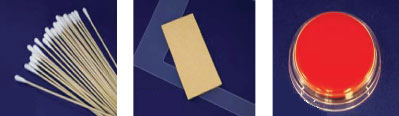
Swabs - Samples are collected by rubbing the swab tip or head over the area of interest. Typically, the swab tips are then rinsed and the solution collected (a process called elution) for detection or further processing. A swab can only sample a very small area, and the collection efficiency can vary widely depending on surface type. Rough or porous surfaces are typically problematic, as either the swab head is tore up or the fibers of the swab are incapable of reaching the DNA material that is within the cracks and crevices of the surface. An elution step is necessary as the fibrous tip of the swab will retain microbes, and may not release the entire sample into solution for processing. Swab sampling was developed in 1917 and has changed very little.
Sponges - Samples are collected in a manner similar to swabs. Sponges can sample larger areas than swabs, but are still limited to a relatively small area as the sponge will lose moisture and collection efficiency as it is used. Like swabs, sponges have difficulty sampling some surfaces types, and retain microbes within the device. Sponge sampling requires an elution step, which can be difficult considering how absorbent and porous the sponge typically is.
Contact Plates - Samples are collected by placing the agar surface of the contact plate onto the surface of interest. Surface bacteria contacted by the plate will adhere to the agar and begin to grow upon incubation. Contact plates are typically small, and therefore only sample a very limited area per plate. Contact plates are somewhat ineffective sampling rough or porous surfaces, as only the "high" areas that come in contact with the plate are sampled.
| << Back: M-Vac System Flyer |